
Course
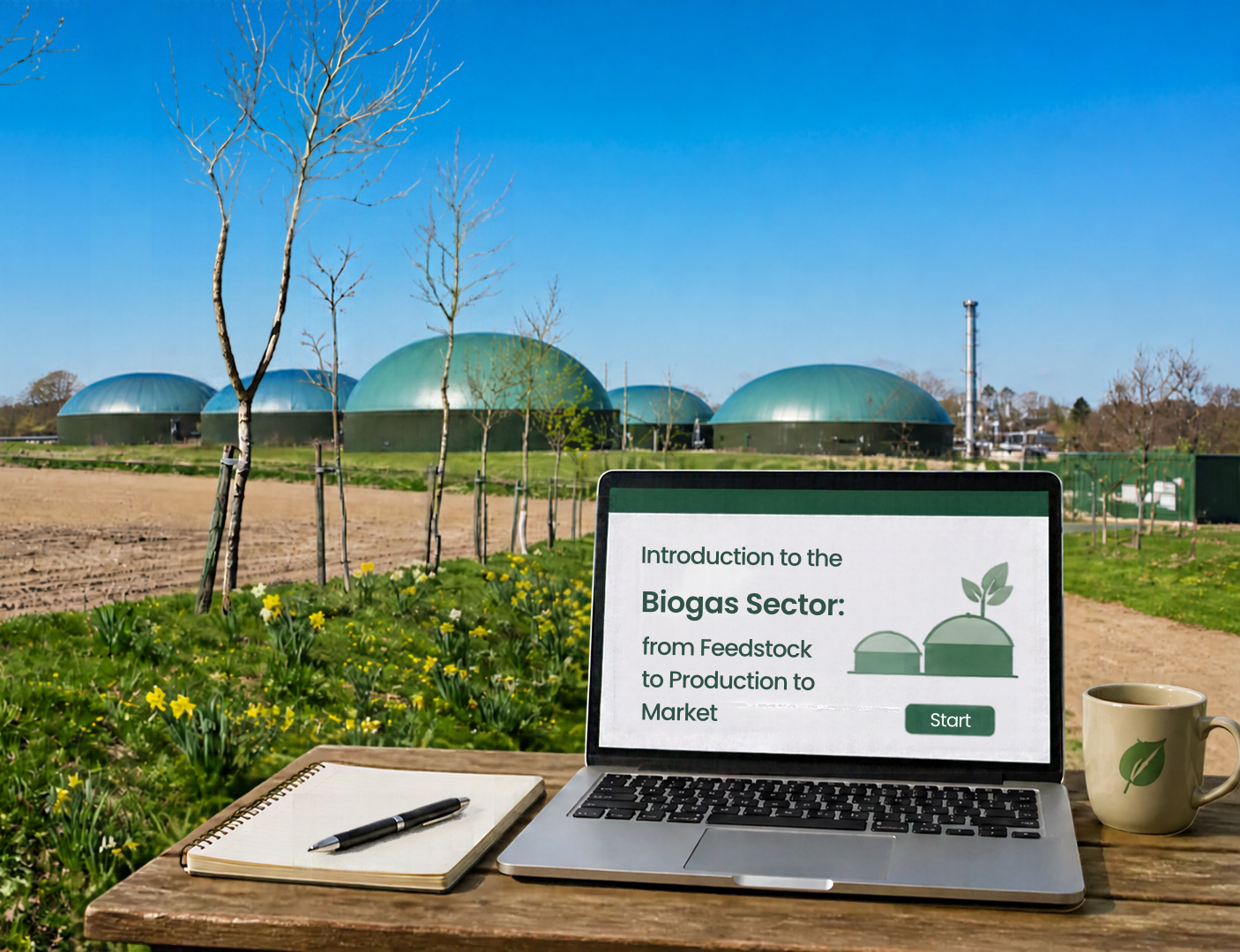
Online Course | Introduction to the biogas sector: from feedstock to production to market

Format
Online Course

Date
18 February 2027

Space
Limited availability, max. 30 participants

Course hours
9.30 – 12.30

Location
Online

Participation fee
250€ general fee / 195€ fee for EBA members (discount code available on EBANet)
Description
The biogas sector is a diversified and fast-growing sector. Its production stems from agriculture and waste management from small to industrial scale and delivers solutions in areas such as industry, transport, heating, agriculture and food and beverage.
Efficient and sustainable production of biogas forms the core business of the biogas value chain.
Biogas and biomethane are renewable energy sources derived from the natural process of anaerobic digestion of organic waste, such as agricultural residues, manure, food waste and sewage.
These valuable biofuels help reduce our dependance on fossil fuels, while their production delivers a natural fertiliser that replaces costly chemical fertilisers and returns vital nutrients and minerals to the soil.
The course starts with an overview of the current state of the sector and its role in the energy transition. It highlights the value of biogases and their long-term economy-wide benefits beyond renewable energy provision, before looking at support mechanisms at European and national levels.
The course then focuses on the types of organic matter used as feedstock, the anaerobic digestion process, and the technologies and process designs used for production. This is followed by upgrading technologies for biomethane and the valorisation of co-products such as digestate and biogenic CO2.
The course uses Q&A sessions with experts and quizzes to optimise learnability. Each section (1-6) will end with a quiz/Q&A and a short break. A case study will be conducted during session 5.
Programme
1. Introduction to the biogas sector: This session provides an overview of the current state of the sector and highlights the increasing attention towards the added benefits of biogas production. It zooms into the main policies and regulations that play a role at European and national level.- State of play of biogas and biomethane in Europe
- The value of biogas and biomethane as renewable fuels
- Main policies of the European Union
- Targets for renewable energy use and the RED III
- Incentives for biogas and biomethane production
- Overview of the key components of a biogas plant
- From biomass to biogas to biomethane
- Feedstock types and their characteristics
- Feedstocks for biogas production
- Gas production potential of different types of feedstocks
- Pre-treatment techniques to improve biodegradability
- Fundamentals of the anaerobic digestion process
- From hydrolysis to methanogenesis
- Key parameters of the anaerobic digestion process
- Biochemical Methane Potential (BMP)
- Optimising the biomethane yield
- Anaerobic digestion technologies and process design
- Digester requirements
- Challenges in anaerobic digestion
- From biogas to biomethane: upgrading technologies
- Importance of methane slip reduction
- In this session a case study is introduced. Participants get the opportunity to work on the case study during a 15 minutes break.
- Role of digestate in organic farming
- Nutrient recovery
- Biogenic CO2 valorisation pathways
- Valorisation of biogas and biomethane
- Biogases and their role in the pathway to net-zero
Who should attend?
This course offers professionals a comprehensive overview of the biogas sector, whether they work at a biogas plant or in a related role. It is designed for plant operators, technology suppliers, sustainability managers, portfolio managers, consultants, strategy managers, (potential) investors, policy officers, biogas project developers, as well as newcomers looking for a full introduction to the biogas sector.What are the advantages?
- Gain insight into the biogas sector and its key drivers.
- Discover the role of biogas and biomethane as sustainable energy solutions.
- Understand how support mechanisms and energy targets work at European and national levels.
- Identify the key components and sensitivities of a biogas plant.
- Explore which feedstock types are suitable for the biogas production.
- Learn how to improve the biodegradability of feedstocks.
- Analyse the main production process of biogas and biomethane, the anaerobic digestion.
- Assess how key parameters influence the biomethane yield.
- Compare the main types of reactor designs for biogas production.
- Review the key aspects for upgrading biogas to biomethane.
- Gain insight into the work of an operator through a case study.
- Appreciate the economic and renewable benefits of the biogas value chain.
- Investigate the role of biogases in the pathway to net-zero.